
Table of Contents
Last Updated on November 1, 2025 by Beverly Dix

What is Health Literacy?
Health literacy is defined by The Office of Disease Prevention and Health Promotion as: “The degree to which individuals have the ability to find, understand, and use information and services to inform health-related decisions and actions for themselves and others.”
Health literacy is a skill. By training up your understanding of health information, you gain the ability to take actions that prevent disease. Similarly, in the case of illness you will take steps to promote your healing and restoration.
Why is Health Literacy Important?
Health literacy is important because chronic disease is killing Americans. We are living longer and sicker due to our lifestyle. Warnings of health educators and practitioners continue to “fall on deaf ears.” The numbers of people suffering with chronic illnesses continues to grow.
Historically, advances in public health and access to medical care freed Americans from the risk of debilitating diseases. Conditions like smallpox, measles, mumps, whooping cough, yellow fever, typhoid…all the vaccine preventable diseases that could kill you. Furthermore, access to medical care provided Americans with a better standard of living. Greater life expectancy was the result. The equation for good physical health looked like this:
MEDICAL CARE = QUALITY OF LIFE + INCREASED LIFE EXPECTANCY
However, this is no longer the case.
We Are Failing to Prevent Chronic Disease
Over the last 50 years, in United States there has been a higher rate of disease caused by lifestyle habits. These diseases are called chronic conditions because they last 1 year or more and require ongoing medical attention. Many chronic illnesses are the result of overindulgence.
Therefore, access to medical care has not positively impacted our national habit of eating too much fat, sugar, and salt. Obesity, diabetes, cardiovascular disease and stroke rob many Americans of a desirable quality of life. Who looks forward to increased life-expectancy in the presence of poor health? As noted by Dr. Atul Gawande in “Being Mortal: Medicine and What Matters in the End,” many people will become prisoners of wheelchairs and hospital beds. Residing at nursing homes, on a boatload of medication. Actively counting down the minutes to their deaths. Consequently, access to medical care no longer ensures increased quality of life.

Seven Chronic Diseases Killing Americans
- Heart Disease
- Cancer
- Lung Disease
- Stroke
- Alzheimer Dementia
- Diabetes
- Kidney Disease
Four Lifestyle Risks for Chronic Disease
- Tobacco Use and/or Exposure to Secondhand Smoke
- Poor Nutrition
- Lack of Physical Activity
- Excessive Alcohol Use
Diseases of Lifestyle Develop Over Time
You don’t wake up one day and have obesity, high blood pressure, diabetes, or high amounts of fat in your blood. The development of lifestyle disease is not sudden. Two important characteristics of chronic diseases is that they are slow to show themselves and are progressive. This means we have the power to decrease our risks for developing a lifestyle-related illness by managing four key lifestyle drivers of disease: tobacco use; poor nutrition; lack of physical activity; and excessive alcohol use. However, the numbers of people suffering from chronic illnesses continue to climb.
This Important Message is Not Getting Through
More and more people suffer from chronic and preventable illnesses. Therefore, clearly health practitioners and educators are not reaching the folks whose health is on the brink of spinning out of control. The medical profession by and large has been unable to take what they know to the street.
This disconnect has resulted in complicated, conflicted, and anxiety producing information being delivered to the public. A surefire recipe for overwhelm and personal paralysis. Consequently, the lives of people who are most in need of help are not improved. More importantly, to simply “teach” health literacy misses the mark. A cookie-cutter, one-size-fits-all approach has not brought about meaningful change in large groups of people who are not the same.
In order to make better decisions about your health, I encourage you to commit to growing your understanding of health information as it relates to your life. Take a look at your habits. What steps can you take to prevent chronic disease? Your quality of life will improve once you know your options. By eliminating tobacco use and/or exposure to secondhand smoke, poor nutrition, lack of physical activity, and excessive alcohol use you will extend the number of years you remain in good health.
It’s Time to Take Control
Find Information
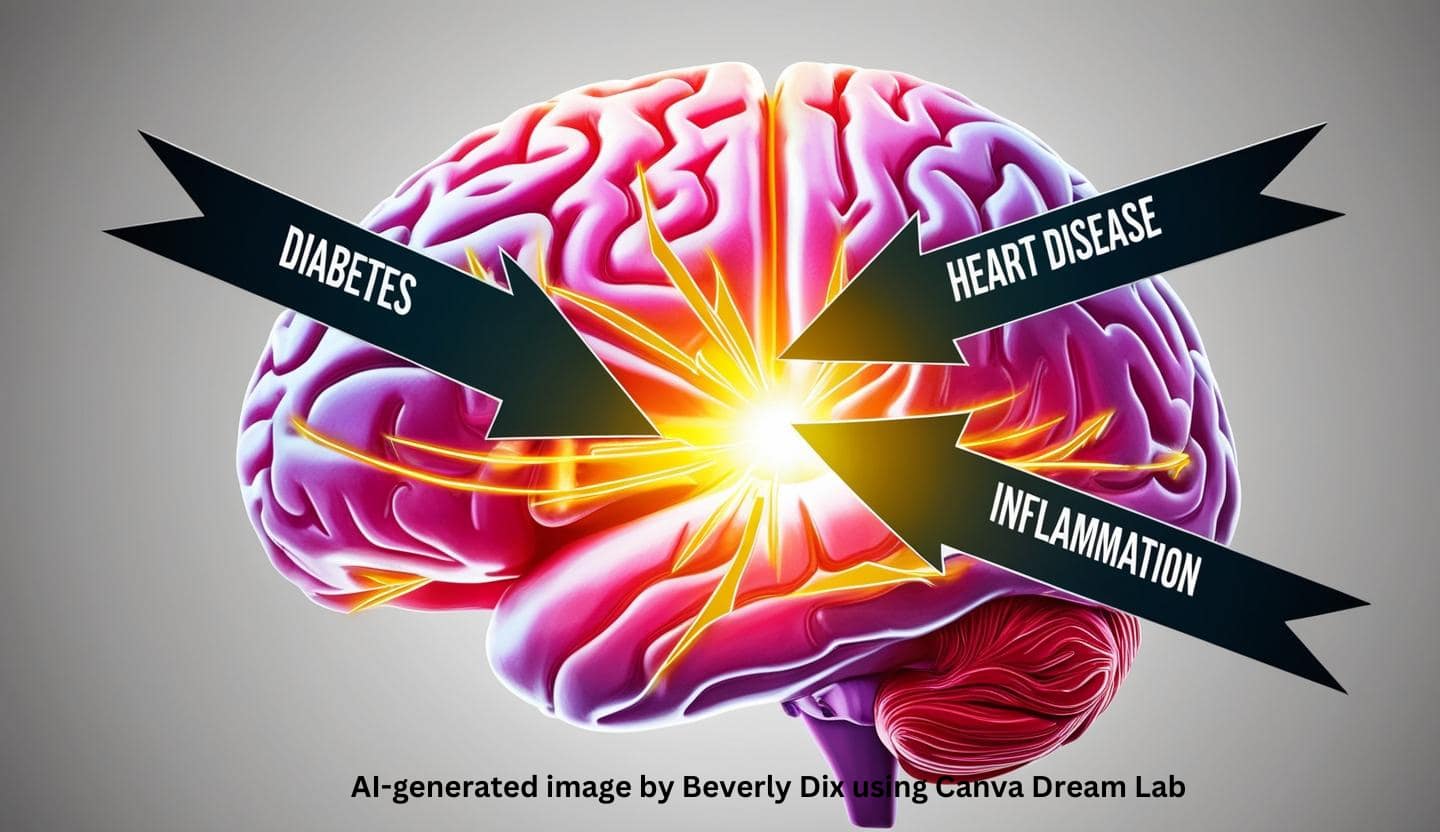
Scientific research has discovered there is a condition the diseases killing Americans have in common. That condition is called inflammation. All diseases of lifestyle are associated with chronic levels of silent inflammation. The body develops inflammation on a cellular level which affects the way our cells communicate with one another. Therefore, the body’s systems begin to go out of whack long before we recognize the signs. Chronic inflammation will make you sick. Runaway inflammation will kill you. You can control the levels of inflammation in your body.
Understanding a Critical Cue
The body’s systems grow gradually out of balance with aging and time. That’s a fact of life. However, if you pay attention to the four drivers of lifestyle diseases, it is possible to prolong years of good health. More importantly, you will prevent debilitating illness in your final years.
Conventional medicine has traditionally treated body systems as separate from one another. But this is an illusion. The body is a unity of connected systems. As such, none of its systems is separate. They all communicate with each other. Much scientific research in medicine today is concerned with cracking the code on what messages the body’s cells send one another. How cells talk to each other. We now know that chronic inflammation involves a series of messages your cells are sending one another throughout your body.
Become Your Own Advocate – Tanya’s Story
Tanya is a 45-year-old married mother of three. She and her husband both work outside the home. Most mornings Tanya and her family have cold cereal and milk, toaster “breakfasts” or prepared sausage with eggs in a handy plastic bowl you nuke. For lunch, the kids either eat a meal prepared at the school cafeteria or a prepackaged ready-to-eat kit of processed food purchased at the supermarket. Tanya and her husband eat lunch at a fast-food establishment or chain restaurant.
Evenings, the family enjoys TV dinners, pizza, or prepared mac & cheese, lasagna, or a meatloaf. Side dishes are usually frozen vegetables or a salad with iceberg lettuce. Sundays, Tanya’s husband cooks dinner and the family eats the leftovers on Mondays.
Intellectually, Tanyas know there is a link between diet and health. But stressed for time and money, family meal selections are based on what is fast, cheap, and filling. Most of the food they eat is ultra processed. Something Tanya and her husband haven’t seriously considered until…
At a 15-minute doctor’s visit, she advises Tanya to lose weight. Tanya’s fasting blood sugar classifies her as prediabetic. Oh, and by the way, her cholesterol level is 300. There are some very good medications for this, the doctor tells Tanya. Prescribed a cholesterol-lowering medication, Tanya makes the decision to explore further options. She will become her own health advocate.
If you relate to this scenario, this is a wakeup call. It’s time to become your own health advocate. Start by downloading 5 Tips to Fight Inflammation.
Next, eat less ultra-processed food. Find five simple weeknight dinners to make at home. These should be easy to prepare, tasty, and nutritious. I will help you get started. Download my recipe: Perfect Chicken Drumsticks.

Summary
- Improving Health Literacy Decreases Lifestyle Diseases
- Lifestyle Diseases Develop Over Time
- You Can Prevent Obesity, Stroke, Heart Disease, and Diabetes
- Become Your Own Health Advocate
- Eat Less Ultra-Processed Food
Work Citation
Gawande, Atul. Being Mortal: Medicine and What Matters in the End. First edition. New York: Metropolitan Books, Henry Holt and Company, 2014. Print.